Independent guide with official sources
Official CIPLE sample: how to study and review mistakes
Turn the published sample into a study plan without memorising answers or inventing a pass prediction.
Oldest dependency check:
Portugal Citizenship Help · CIPLE preparation · 4 min read
Editorial review:
Short answer: attempt the sample before checking the key
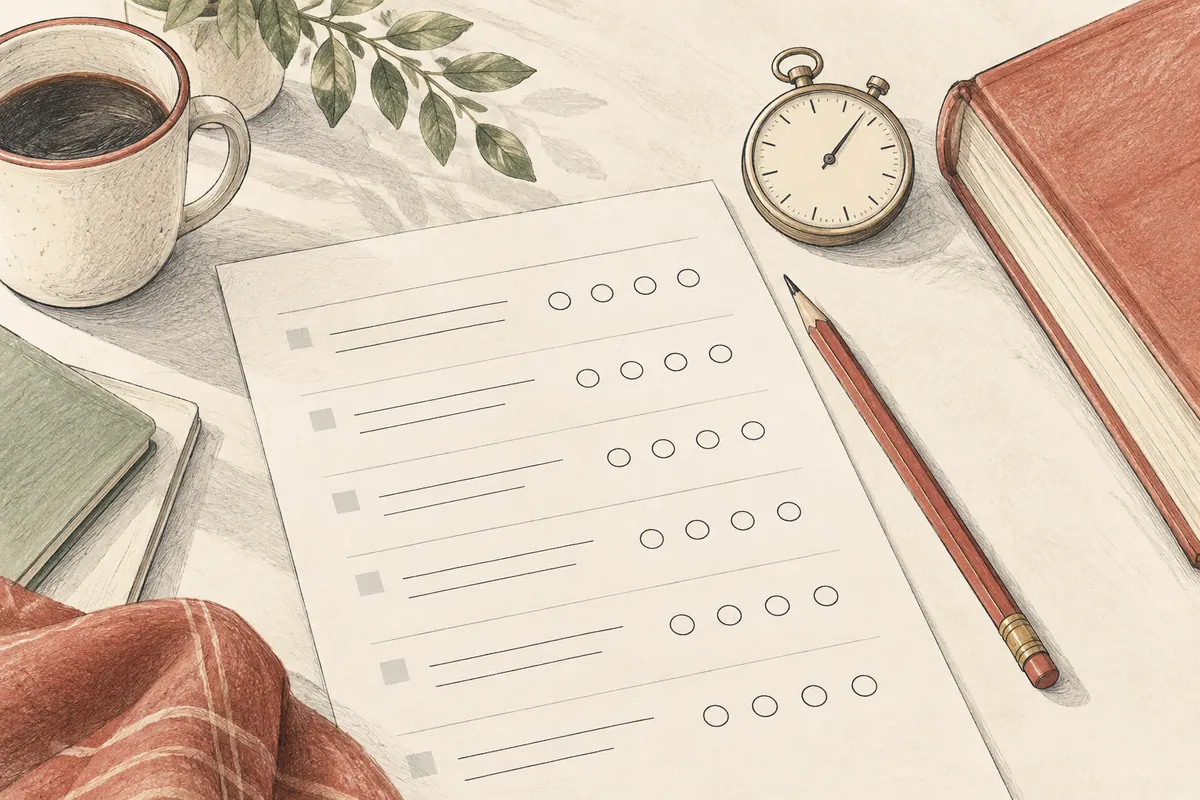
Use the official CIPLE sample to become familiar with the examination: open the materials linked on CAPLE’s page, attempt them, then consult the key. The purpose is to understand instructions, task types and difficulties rather than memorise answers. The official page provides reading and writing materials, listening materials, audio and an answer key.
This guide explains a study method without reproducing the official question bank. A published sample does not promise which questions you will receive or provide a complete level diagnosis. Keep independent answers separate from answers corrected with help. That makes the exercise useful for planning further study instead of producing a misleading sense of readiness.
Confirmed by official source
The official CIPLE page provides reading/writing and listening samples, an audio recording and an answer key.
Last checked:Prepare an attempt you can interpret
Before starting, check that the files open and the audio plays. Prepare somewhere to record answers and doubts, but keep the key closed. Decide whether you will study with pauses or observe the published component timing. Both activities can be useful if you clearly record which one you performed.
Do not compare a session with a translator, pauses and reference checks with an unsupported attempt. Note any interruption. This record helps distinguish a language difficulty from an instruction or concentration difficulty. Your first session may simply establish how the material works. You can then make a separate attempt under the conditions you want to observe, rather than disguising preparation as assessment.
Confirmed by official source
CIPLE assesses reading and writing in a 1h15 block (45%), listening in 30 minutes (30%), and spoken production/interaction in about 15 minutes per pair (25%).
Last checked:When reviewing, identify why you chose an answer
After the attempt, compare objective answers with the matching key. For each discrepancy, locate the information supporting the correct answer and explain why you selected another one. I did not know is a starting point; I confused the day with the time already identifies a useful revision task.
Create your own difficulty groups: vocabulary, understanding information and reading instructions. Add a group if needed. These are not official marking categories; they help select an action, such as revising expressions, replaying a segment or restating an instruction in your own words. Changing the answer letter without understanding the reason loses much of the learning value.
Writing and speaking need different feedback
An objective answer key cannot automatically assess your writing or the conversation you can maintain. For writing, check whether you fulfilled the request and communicated clearly. For speaking, observe whether you answer and interact. These are study prompts, not an official marking grid or a substitute for an assessor.
Keep the first version and request specific feedback from a teacher or partner: can the recipient understand the request, or did I answer the question about the place? Then try a similar situation with new details. Reading a corrected version can help, but it does not replace producing another message or responding without following a prepared script.
How to repeat without memorising the solution
After correction, do not treat an immediate second attempt as proof of progress: you may still remember the answers. Change details in an original exercise, choose a new text or work on another message with the same purpose. The useful question is whether you can transfer the strategy to a different situation.
You can return to the sample later to check instructions or revisit a specific difficulty. Record that the material was familiar. Our exercises and practice papers are original and independent of CAPLE. They provide variety, but percentages from different practice settings should not be assumed to measure exactly the same ability or carry the same significance.
A review log that fits on one page
For each session, record the date, material, conditions, main difficulty and next action. Make the action achievable: listen to a message and extract two details, write another request or practise a short exchange. A review log should help you act rather than become an inventory of every mistake since you began learning.
The original template below can be copied into your notes. It contains no pass prediction. After several sessions, notice which difficulties recur with new material and bring examples to a teacher. Access sample files through the official page so you can identify the published material instead of relying on a copy with no clear provenance.
Original study example
Data / material: Condições da tentativa: O que consegui sem ajuda: Uma dificuldade e a sua causa: Próximo exercício com material novo:
Sources and scope of this guide
Official sources support the stated legal, language and certification facts. Plans, examples and checklists are independent editorial suggestions, not instructions from an authority.
Continue here
Practise Portuguese A2 for free
Original learning exercises with explanations. This is not a CIPLE exam.
Have a question?
Choose a topic to contact the project. This is not legal advice or an official application.
Test mode: only fictional details are sent. Do not enter personal data.
The server queue retains delivered requests for 7 days. This form does not create an account or subscription. Privacy.